
The Origin
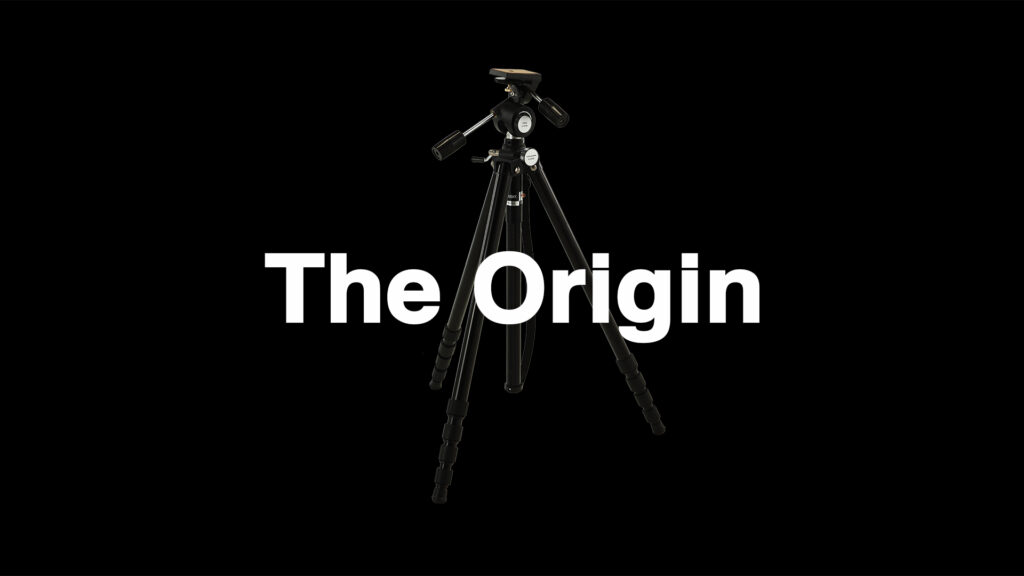
TSUBAME tripods have been sold in Japan under the HUSKY name for more than 60 years. The core design philosophy behind the original HUSKY was already in place at the American company Quick‑Set before World War II. The first models are said to have been built from aluminum tubing originally used to route electrical wiring inside aircraft. After the war, HUSKY tripods were brought to Japan by the U.S. military, where they gradually gained a strong following. In 1963, Quick‑Set appointed Toyo Trading Co., Ltd. (known for its TOYO‑VIEW cameras) as its Japanese agent, marking the tripod’s official debut in Japan.
Since then, there has never been a full “clean sheet” redesign. In that sense, HUSKY—and now TSUBAME—can legitimately be called one of the original reference designs for modern tripods. Instead of constantly changing models and abandoning compatibility, Toyo Trading inspected every tripod that came back for service and used that real‑world feedback to refine the product. When a part showed wear, the material was upgraded while keeping the original dimensions. When plating proved insufficiently durable, its thickness and process were adjusted down to micron‑level tolerances. Even the length and diameter of the smallest screws were reviewed and improved. Through countless small, carefully controlled changes, the tripod has continued to evolve while maintaining compatibility across generations.
Today, it’s routine for us to receive HUSKY tripods that were made 20 or 30 years ago for overhaul. Because the fundamental dimensions of the key components have never changed, these tripods can be serviced and restored using current production parts without compromise. Across the world of industrial products, it is rare to find a tool that has grown in this way over such a long period of time.
To carry this tradition forward—and to give photographers around the world the same long‑term confidence Japanese professionals have enjoyed for decades—the HUSKY tripod, long considered a standard in Japan, is now taking flight globally under a new name: the TSUBAME Tripod.
100% Made in Japan
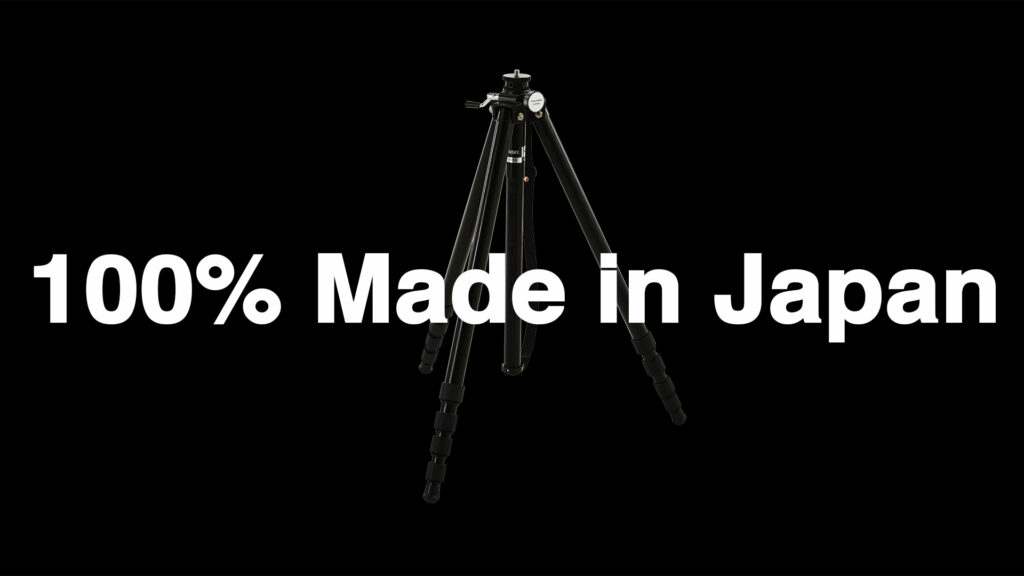
The production of tripods was taken over from Quick-Set to Toyo Trading, and was fully transferred to Studio Jin Co., Ltd in 2022. We don't use cheap components, we carefully select the best materials, and pursue precise machining. Every component, down to the screws, is manufactured in Japan. Of course, assembly also takes place in Japan, with thorough quality control. Because we manage all factories in-house, from manufacturing to finishing, we can confidently say that our products are 100% made in Japan, but not 99.9%. Even if people say we're going against globalization, we are determined to maintain our position as the only remaining tripod made entirely in Japan.
Many of the components are manufactured and final assembly is carried out at factories in Tsubame City, Niigata Prefecture, in Japan. Tsubame City is known as a "town of manufacturing," producing everything from cutlery, metalworking products, and Western-style tableware to semiconductors, LCD displays, medical equipment, and components essential to the automotive and aerospace industries. Its advanced metalworking technology is among the best in the world and a variety of products are sold worldwide under the "Made in TSUBAME" brand. TSUBAME tripods are officially certified under this brand and support the equipment of photographers around the world.
for Professional
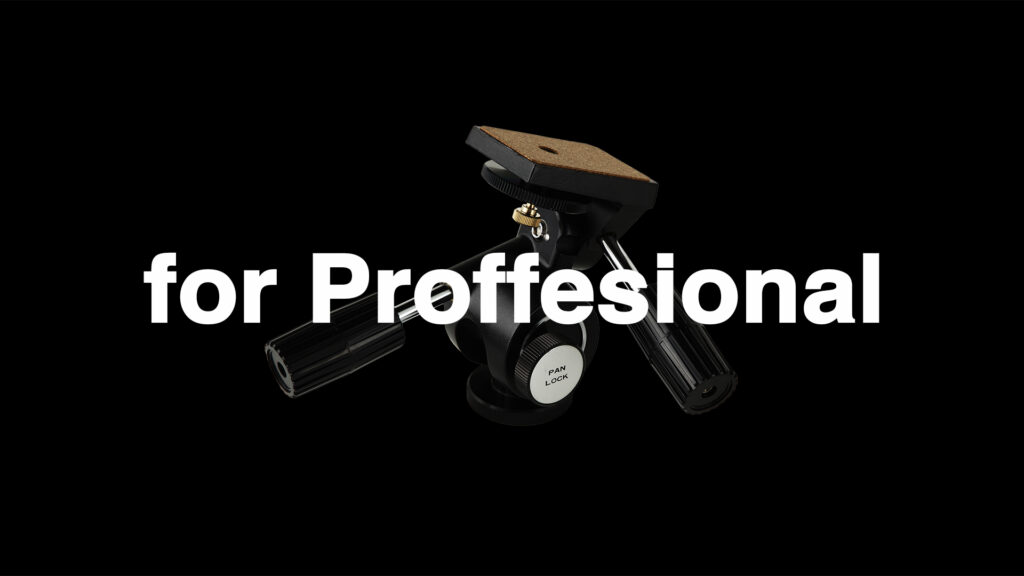
HUSKY tripods are by far the most commonly used among professional photographers in Japan. There are probably very few of them who have never seen or handled a HUSKY.
Why is it so popular with professionals? Not only is it an excellent design that ensures stability during shooting, but the operability and ability to hold heads are also essential. And in professional shooting location and/or sets, where failure is never been allowed, robustness are is also an absolute requirement. HUSKY tripods are extremely lightweight for a large tripod and the strap, included as standard, also enhances portability. A close look at the design drawings for each component reveals the commitment to durability. Despite being used by professionals dairy basis for many years, we see many of returned tripods, inspected, have surprisingly little wear on their components. We find this point in our everyday in-house repair work.
A tripod is essentially a tool for holding a camera equipment and capturing the desired composition. That's why it's not something you think about carefully when using it. You set up your equipment as you want, move it as intended without even thinking about it, take a still image where you want it, and then take it down smoothly. It may take a lot of practice to master it. But because it's a tool with excellent basic performance, it becomes like a part of your body as you use it. There's a good reason why our tripods have been chosen and used by professional photographers for generations.