
We will answer your questions and inquiries about TSUBAME-Tripod.
-
Why can't you change the leg angle on a TSUBAME tripod?
-
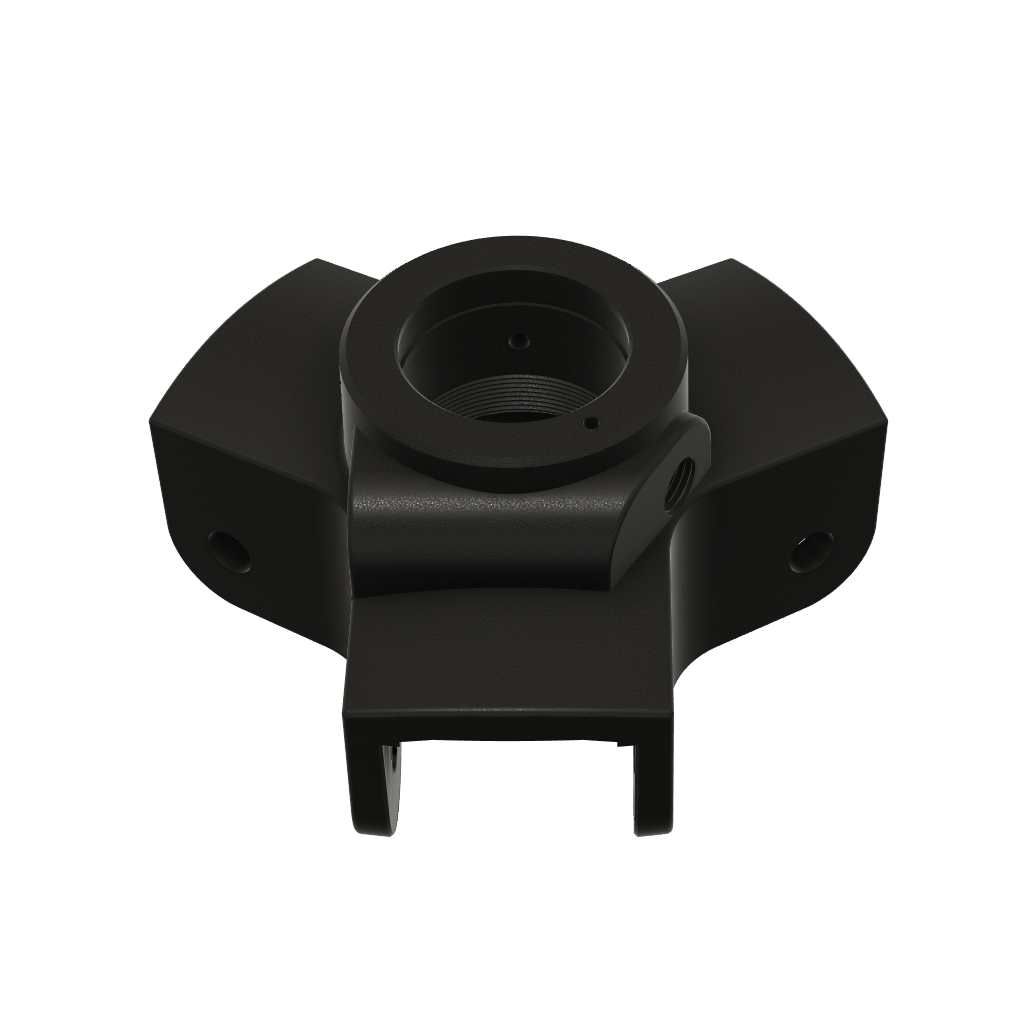
There are two reasons for this:
First, to change the leg angle, multiple parts must be combined between the tripod body, which holds the three legs, and each leg pipe, and made movable. In fact, this tripod body is extremely important as the main body of the tripod, and the "load capacity" of most tripods is determined by the strength of this tripod body, not the strength of the leg pipes. As you can see in the image, the TSUBAME tripod body is made entirely from a single piece of metal, and only the components necessary for the elevator's operation are attached. Furthermore, the tripod body and the leg adapter at the end of the pipe are designed to have surface contact. All of these designs ensure more than sufficient robustness, durability, and stability, as professional photographers would not want to sacrifice anything.
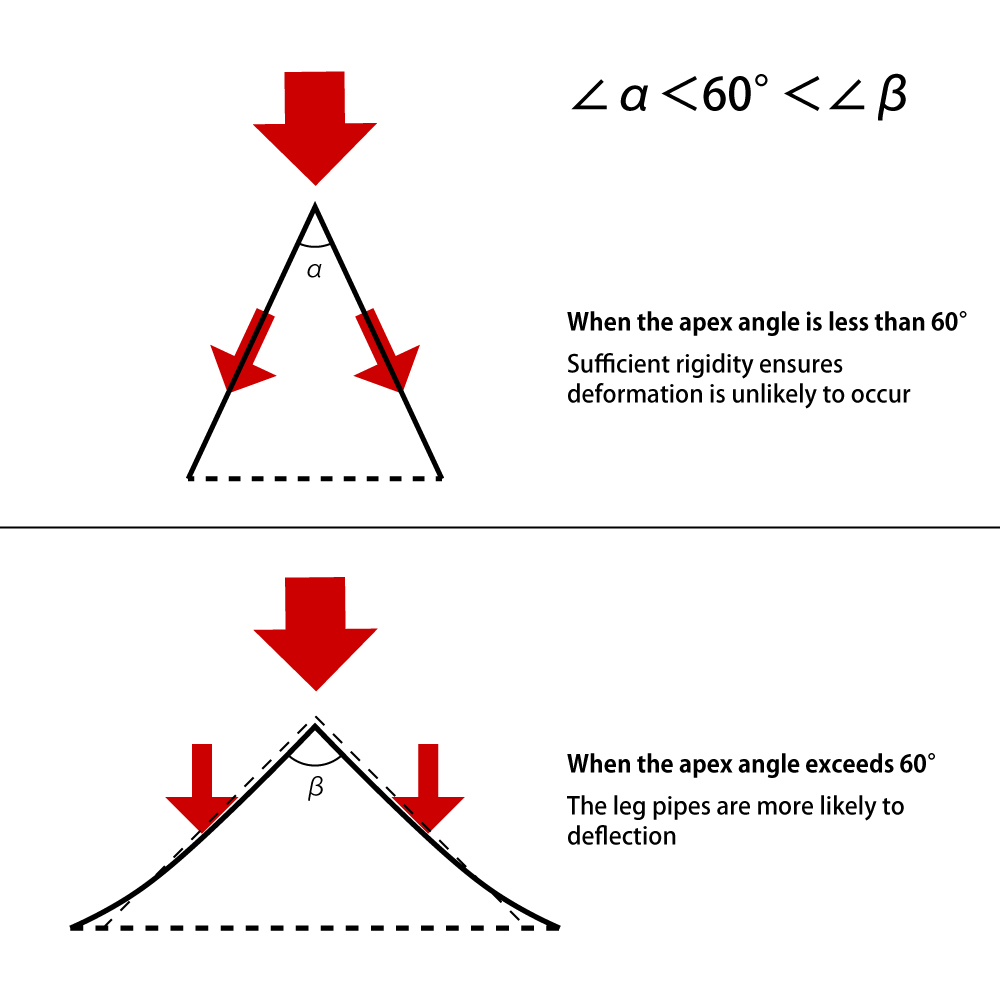
Second, when you look at the tripod from the side with the legs extended, take a look at the triangle formed by the two leg pipes and the ground. On flat ground, this triangle would be an isosceles triangle. I don't want to get into the complicated structural mechanics, so I'll explain it as simply as possible: as you can see in the image, if the apex angle is less than 60 degrees, there is enough rigidity to support the weight of the equipment, but if it exceeds 60 degrees, the pipes will begin to bend rapidly. Being able to spread the legs at an angle greater than 60 degrees does not necessarily mean you will be able to take stable photos.
-
Are TSUBAME tripods unsuitable for low-angle shooting?
-
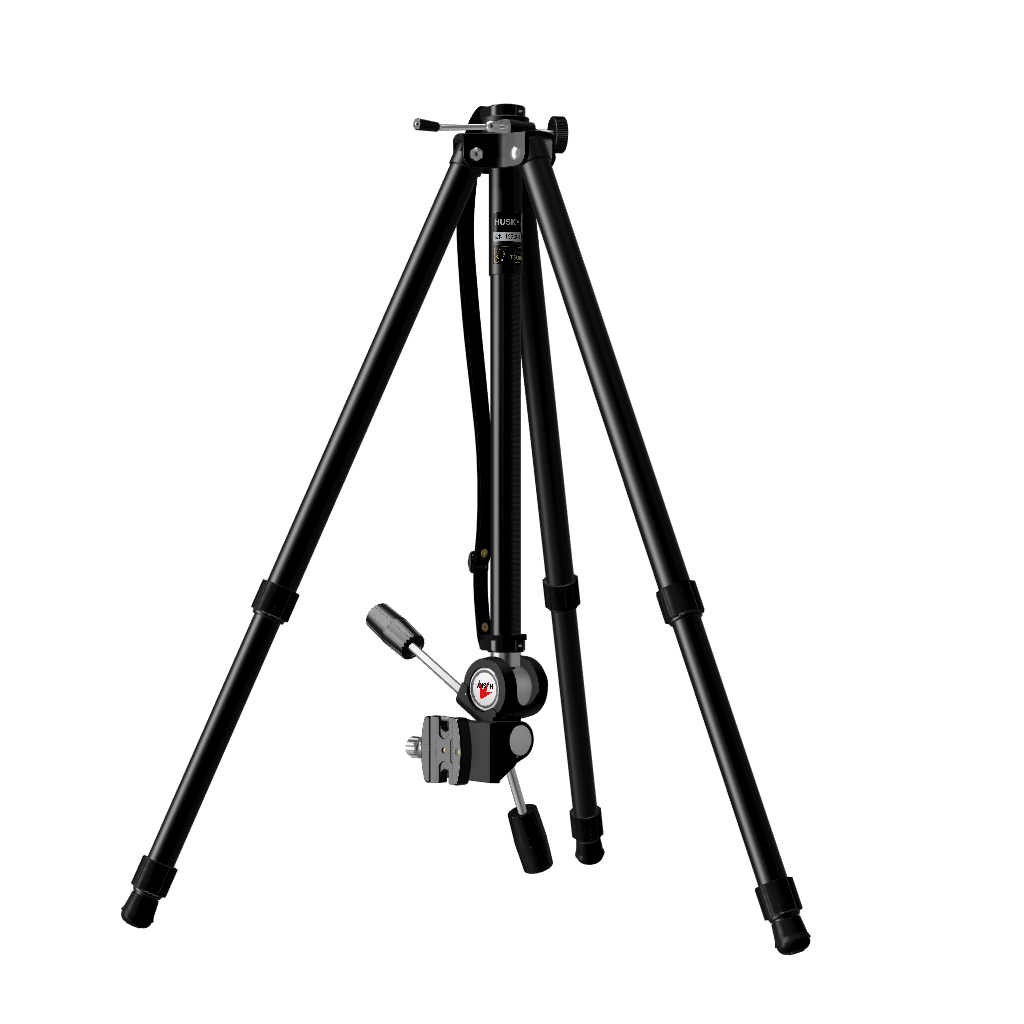
This is related to the previous question. When you try to take low-angle shots with a tripod that allows for adjustable leg angles, even though the legs are spread with its highest angle, tripod body position is still about 15cm above the ground. When a head is attached to it and the camera body and lens are placed on top of it, most tripods could have a minimum shooting height of at least 25-30cm.
In case of TSUBAME tripods, you can pull out the elevator and install it in reverse. In this way, with a tripod with an integrated head, you can shoot from a ground height of about 13cm only keep space for tilt level lock knob. By using an L-bracket, you can take photos without having to turn a camera sideways or upside down, and if you attach a ball head to a tripod leg, you can lower the camera all the way down to the ground.
Whether you can truly achieve low-angle shots freely depends on whether you can shoot in reverse with the elevator.
-
Isn't it inconvenient when the upper pipe rotates when tightening or loosening the leg pipe?
-
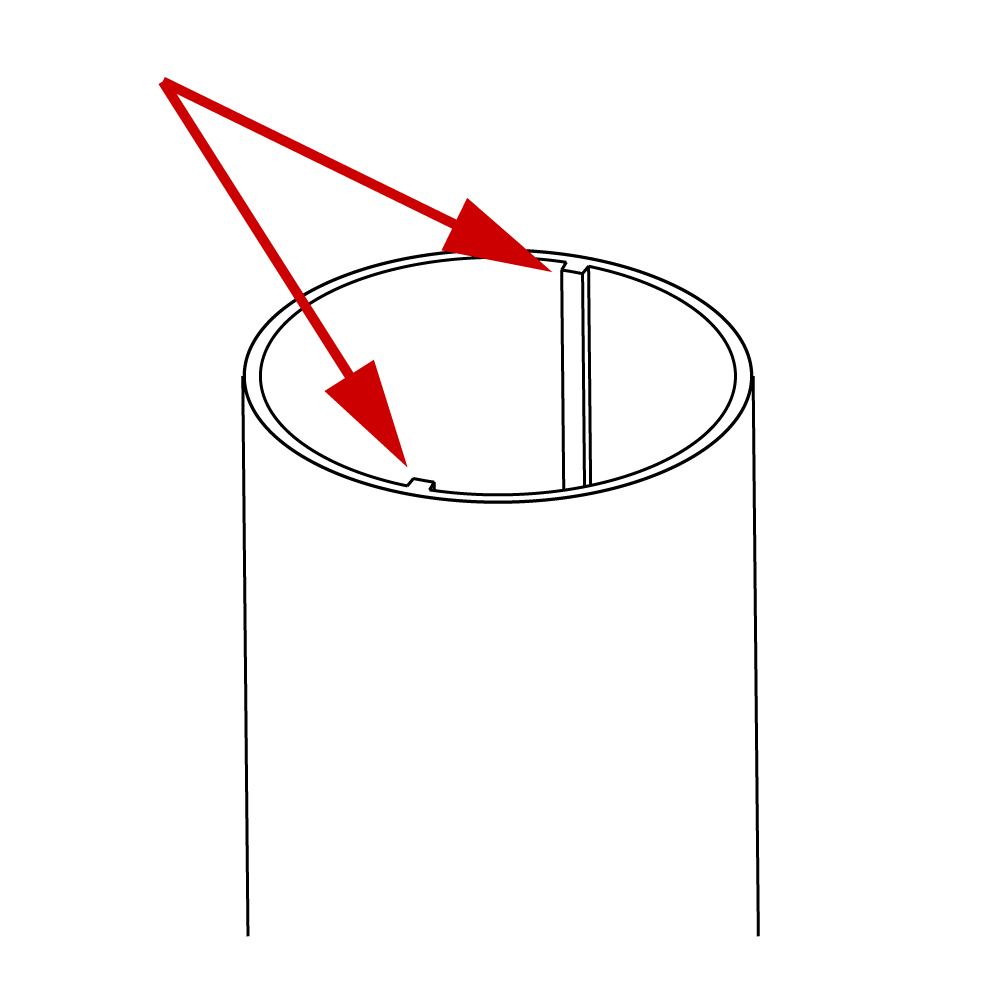
To prevent the leg pipe from rotating with the lock ring, it is necessary to add one (or two) ribs to the inside of the pipe, acting as a spine. While it is technically possible to add such feature on metal pipes, it would become extremely expensive. Considering it, we decided that we would not want to reflect cost the feature in the product price.
Also, the closer the cross-section of the leg pipe is to a perfect circle, the greater its strength will be. Additional process onto pipes tends to reduce roundness, resulting in reduced strength. It was what we wanted to avoid. As long as you get into the habit of gripping the pipe one level above when turning the leg pipe lock ring, we don't think it will be much of a problem.
-
Why only rubber tips at the ends of the leg pipes are available, but no spikes?
-
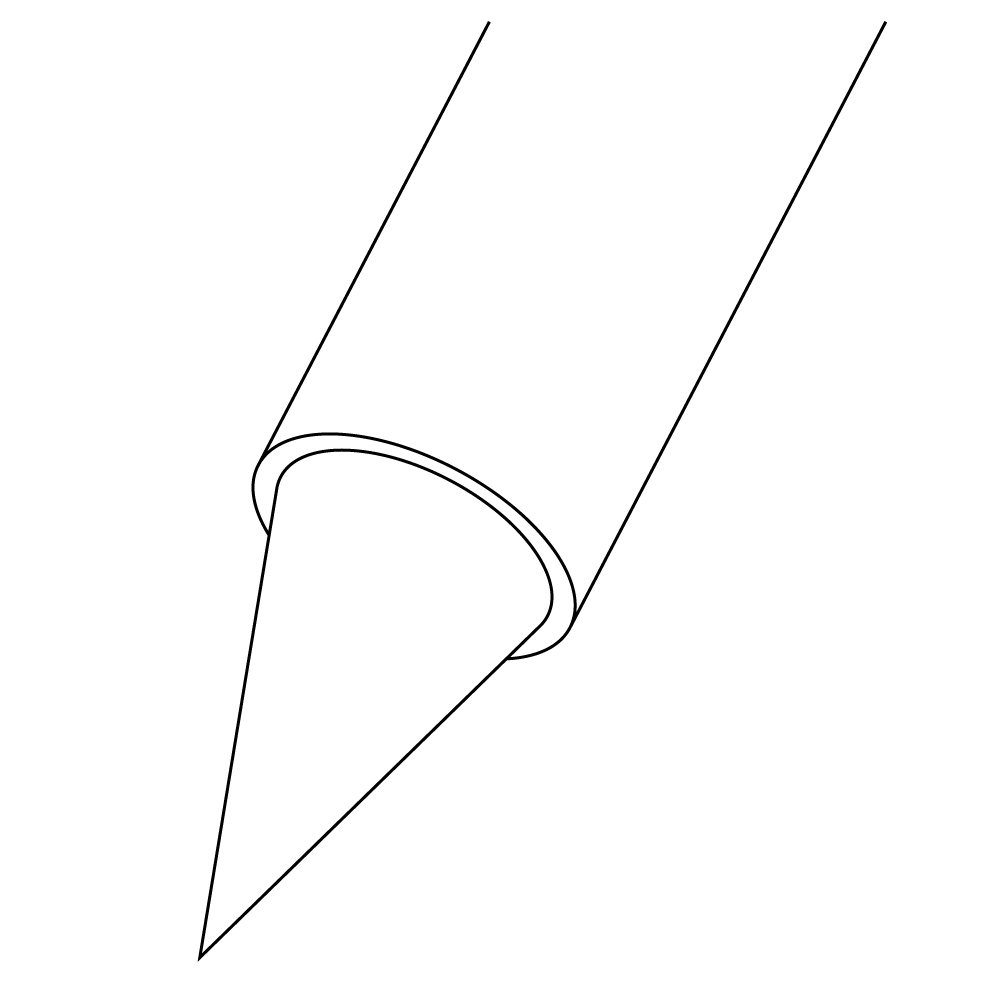
In fact, we once produced spike version as a custom made at a customer's request. On a midwinter night in Alaska, on the frigid frozen soil and ice, spikes made of nothing more than sharpened stainless steel rods had no grip whatsoever and actually made it slip, but we found that rubber tips were far superior. As an improved version, we developed spikes using the carbide tips embedded in ski poles. They were something we were finally satisfied with, but they were quite expensive. So we think those spikes are suitable for users who really need them, but for those who just think they might be convenient, we think it is a feature which is not worth spending significantly higher cost.
Please note that if you use spikes in unfrozen soil, sand, or fresh snow, the leg pipes will easily bend when strong lateral forces are applied, making them impossible to fold as usual.
-
I need to tighten each locking part strongly to lock it.
-
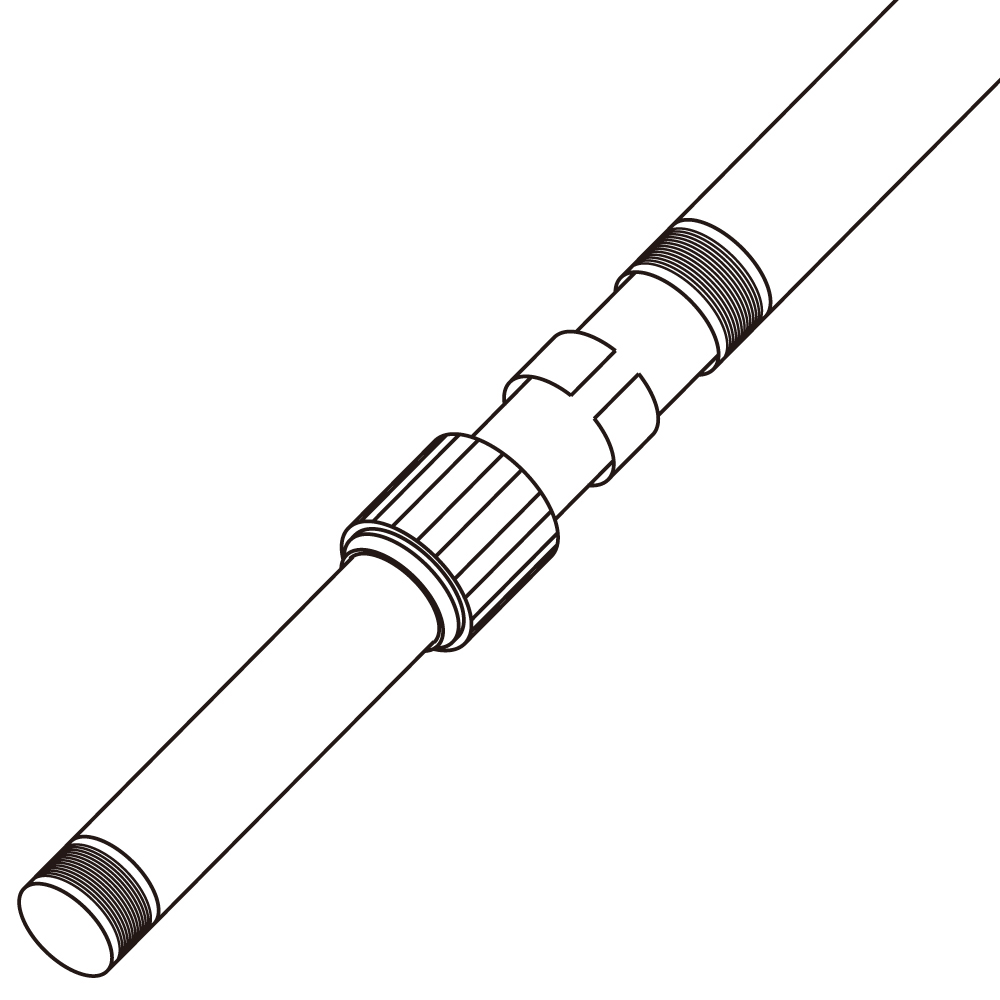
This is probably true for most industrial products, but overtightening all lock rings and lock knobs is strictly prohibited. When locking parts are tighten with excess force, screw thread where metal surfaces are contacting each other can have rapid wear. If the grease normally applied to the threads runs out or the grease is contaminated, wear at screw thread gets further accelerated, eventually the threads are stripped so that making it impossible to tighten.
For example, if you pull out the leg pipes and tighten the metal lock ring, and you have to use all your strength to tighten it, it's possible that grease or dirt has accumulated on the plastic internal lock ring. In such cases, completely loosen the metal lock ring, remove the internal lock ring, clean it thoroughly with a plastic-safe parts cleaner, wipe each pipe, and then reassemble. This should improve the problem.
Column Lock knobs is also an area where problems are often seen. If the tips of the EV post or lock knob are dirty or have grease on them, the EV post can slide down unless tightening it with excess force. As the result, the steel male thread wears down the aluminum alloy female thread. If the thread is stripped, the knob spins freely, requiring repair.
-
Tilt level lock knob shaft is bent.
-
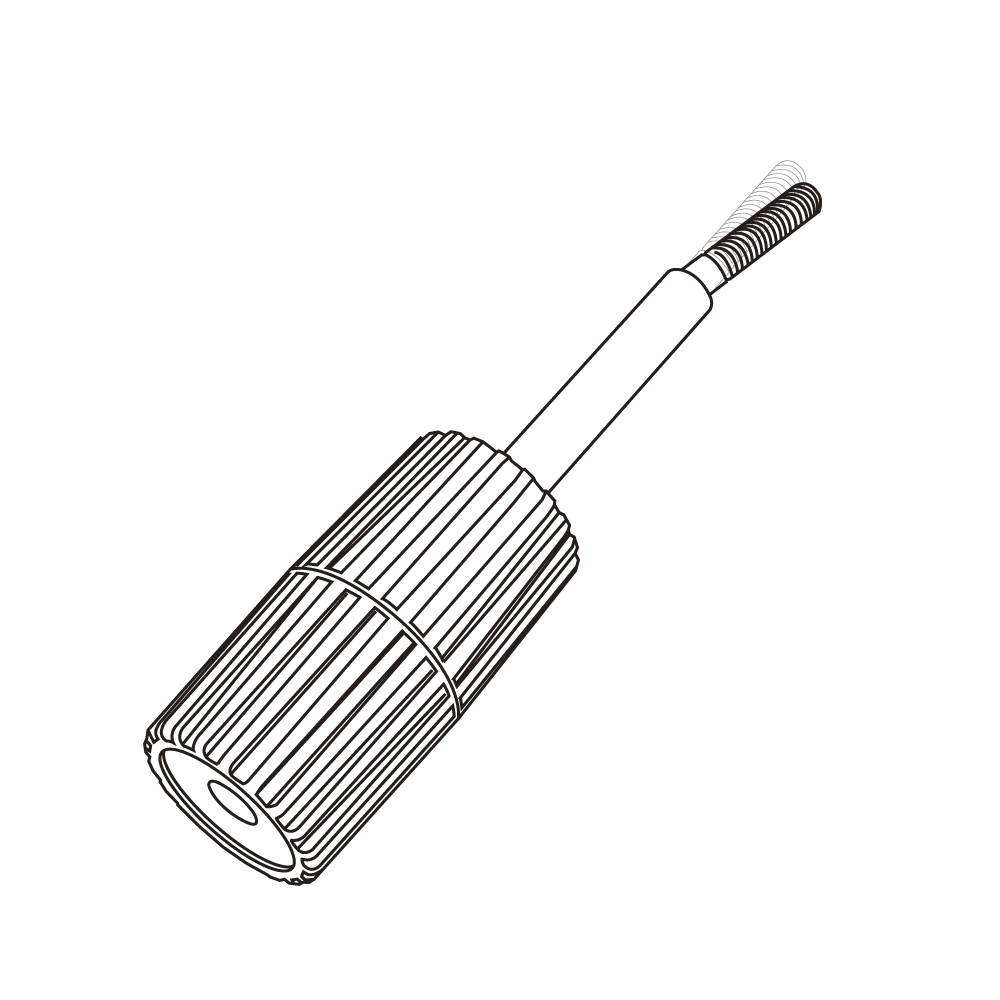
2 tilt level lock knobs extend in two directions from the 3D head and an EV crank gear handle protrudes from the legs. Of course, this configuration was originally designed for ease of use, but it also serves another important purpose. The material of lock knob shafts and crank gear handles was selected to bend and absorb the impact if the tripod were to tip over for any reason. Being unable to continue shooting due to an accident can be fatal for a professional photographer, so the design aims to reduce such possibility as much as possible. As long as the camera body and lens are intact, and the lock knob shaft is only slightly bent or the crank gear cannot be retracted, there's a good chance it can be managed.
However, if you continue to use the tripod with bent lock knob, the steel lock knob shaft and the brass internal locking link will no longer be parallel, and the brass parts will be rapidly worn down. Eventually, the pan bar will penetrate the internal locking link and come into direct contact with the connecting pivot or head drum. In this state, there's no longer any holding power or control, so we don't recommend continuing to use it while it's even slightly bent.
Also, this does not mean that you can simply bend a bent lock knob shaft back into a straight position. If you forcefully straighten a bent metal piece, it will create tiny cracks inside, and if you continue to tighten and loosen it in that state, the cracks will continue to grow until it suddenly snaps. To prevent this from happening while you are shooting, in case a lock knob shaft is bent, replace it with a new one as soon as possible.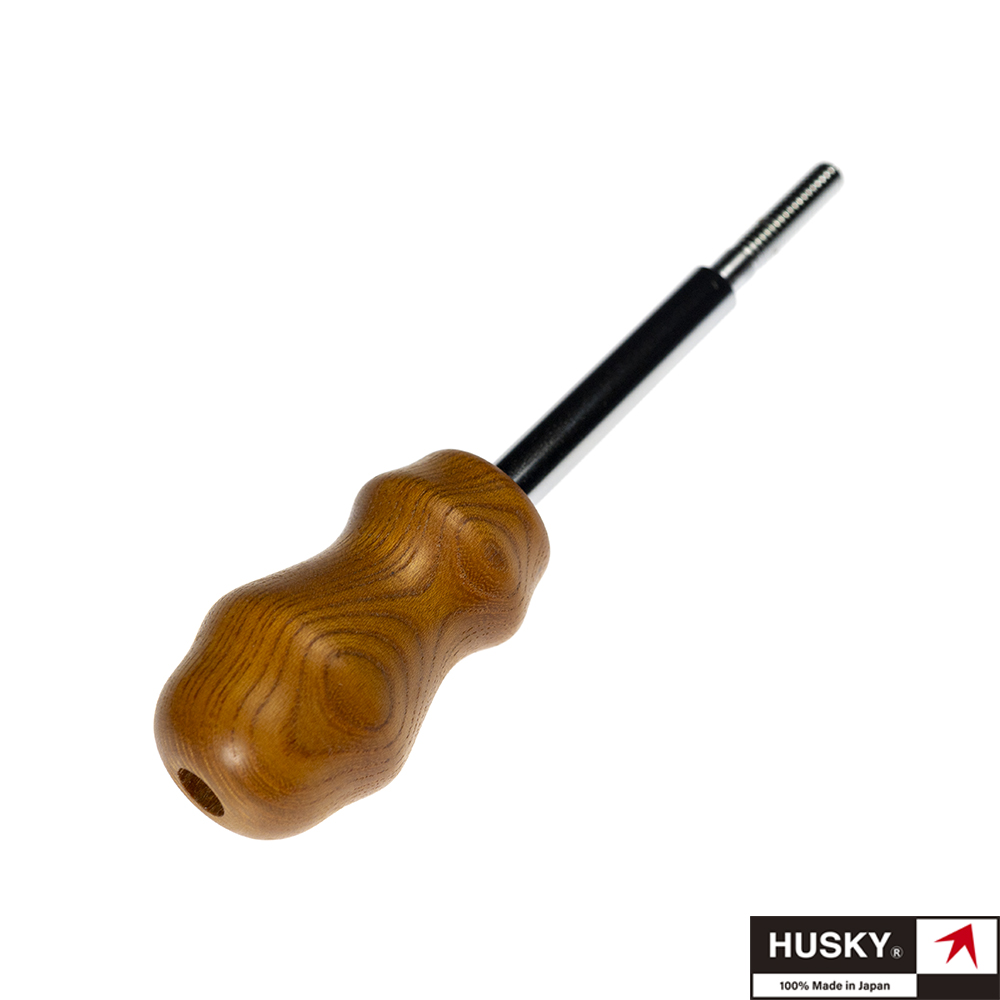
Additionally, the plastic grip of the tilt level lock knob is made of a material that is impact resistant and resistant to deterioration over time, but we have also heard some feedback that the design is a bit rugged.For customers who want a special tilt level lock knob, we also produce wooden grips.
This is a masterpiece made from Japanese zelkova wood that has been completely dried for over 20 years since being felled, and is handmade one by one by skilled Japanese woodworkers.